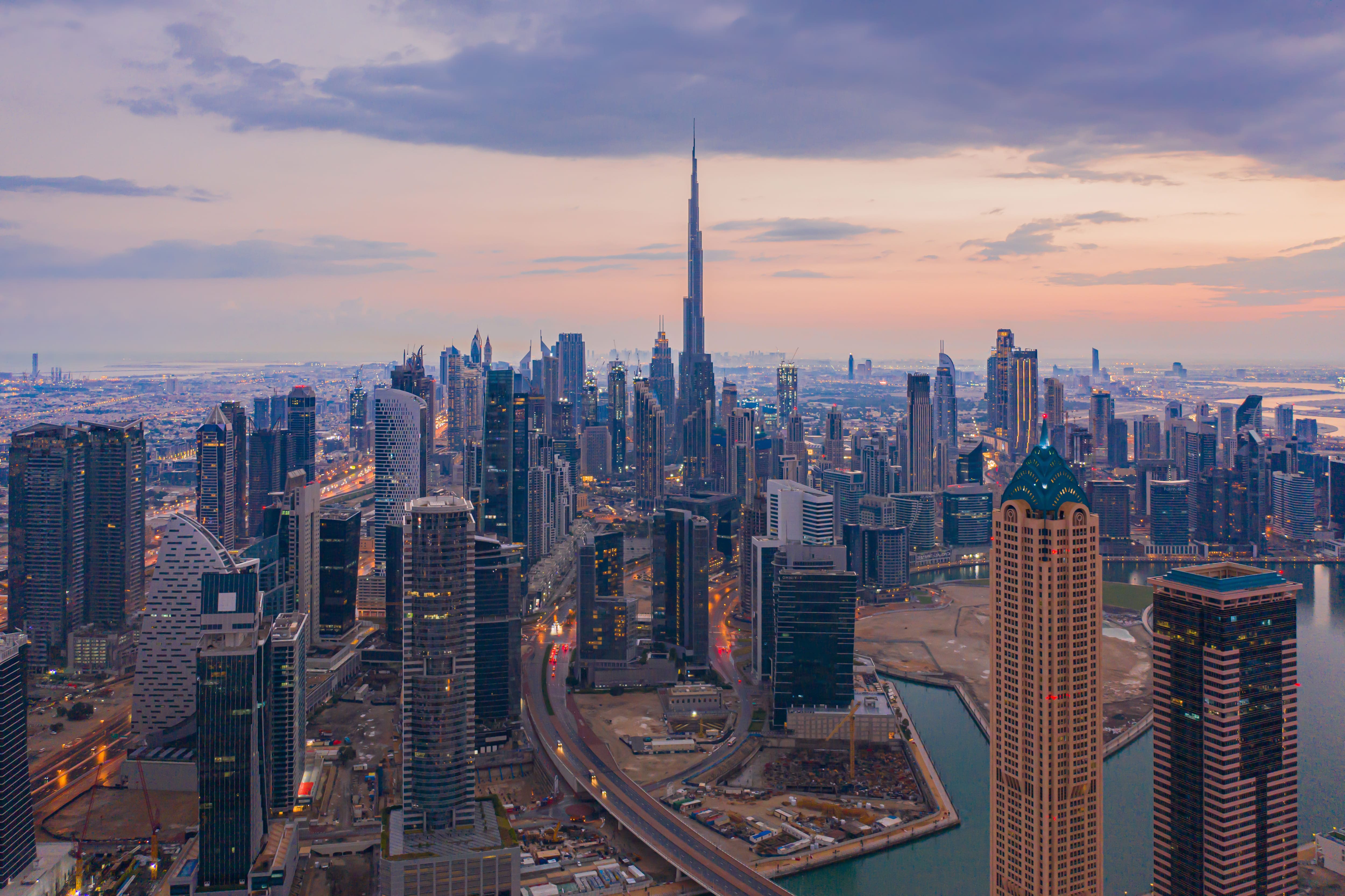
Why Dubai Endures: The Foundations of Long-Term Value in One of the World's Most Watched Cities
.jpeg)
Every great city is tested, eventually, by its ability to demonstrate that what made it valuable in its formative years was real and not contingent. Dubai's test is continuous and public. It is watched, analysed, and debated by investors, economists, and lifestyle commentators across the world. And for those who understand what Dubai is actually built on, the scrutiny is welcome.
The case for Dubai's long-term value is not sentimental, and it does not depend on optimistic projections. It rests on a set of structural realities that are visible, measurable, and increasingly well understood.
A Hub That Cannot Be Easily Replicated
Dubai sits at the geographic intersection of Europe, Africa, South Asia, and the broader Middle East. This is not a marketing claim; it is a logistical fact that shapes everything from aviation routes to financial flows to the composition of its resident population. Within a five-hour flight radius lives approximately a third of the world's population. That proximity to markets of enormous and growing scale is not something that can be manufactured elsewhere.
Over several decades, Dubai has built infrastructure calibrated to that geographic advantage. The port. The aviation network. The financial free zones. The regulatory frameworks designed to attract and retain international business. These are not cosmetic investments. They are the scaffolding of a regional hub, and the sunk cost and operational momentum behind them is substantial. A company or a high-net-worth individual choosing where in this part of the world to base themselves is not choosing Dubai over a blank alternative. They are choosing it over options that do not yet have the depth of institutional infrastructure that Dubai has spent thirty years building.
A Population Composition That Sustains Demand
Dubai's resident population is, by design, internationally mobile and economically productive. The profile of people choosing to live here has shifted materially over the last decade. An increasing share are not transient workers but individuals and families who have chosen Dubai as a long-term base: for the tax environment, the safety, the quality of schools, the quality of life, the ease of doing international business. This is a different population dynamic from the one that defined earlier cycles.
A city whose residents are choosing it rather than simply passing through it develops a different kind of economic resilience. They invest in property because they plan to stay. They invest in schools and medical care and community because they are building a life, not serving a contract. The demand they create is less volatile than pure investment demand, and more sustaining.
The Governance Premium
Across the world, investors in property and business have become acutely sensitive to something they previously took for granted: stable, predictable governance. The ability to rely on a legal framework that will be enforced consistently, on a regulatory environment that does not change arbitrarily, and on a government that treats the security of capital as a strategic priority, has become a scarce and therefore valuable thing.
Dubai has invested in this reputation deliberately. The legal and regulatory reforms of the last decade, the strengthening of property rights, the establishment of transparent dispute resolution mechanisms, and the consistent signalling that long-term investment is welcomed and protected, have compounded into something that functions like a premium. Investors who have options in multiple markets price that premium into their location decisions, and Dubai is a beneficiary.
Quality of Life as an Economic Driver
There is a version of the Dubai story that frames quality of life as a secondary benefit, a lifestyle bonus that sits alongside the financial rationale. The more accurate framing is that quality of life is itself an economic driver. The competition for globally mobile talent and capital is fierce. The decision-makers who control large flows of investment and enterprise are choosing where to live, and in making that choice they are weighing factors that go well beyond tax rates.
Safety. Clean urban environments. World-class healthcare. International schools. The ability to live well in the full sense of that phrase. Dubai has invested heavily in all of these, and that investment creates a self-reinforcing dynamic: the people attracted by that quality of life bring business, capital, and further development with them. Their presence makes the city more interesting to the next generation of arrivals.
What This Means for Property
For property specifically, these dynamics converge into a simple observation: Dubai is a city where the reasons to be present are structural and diversifying, not narrowing. The property market in a city of that profile does not behave like a commodity market. It behaves like a market in a place where people have decided they want to be, and where the underlying reasons for that decision are accumulating rather than eroding.
At Cyra, we build in Dubai because we believe in what Dubai is becoming. Not what it was, not what it looked like at its most speculative, but what it is in the process of being: a genuinely global city, grounded in geography, governance, and the quality of life it delivers to the people who choose it. That is where enduring value comes from.
.png)