
Dubai Property Investment: Why the City Endures for Long-Term Value (2026)
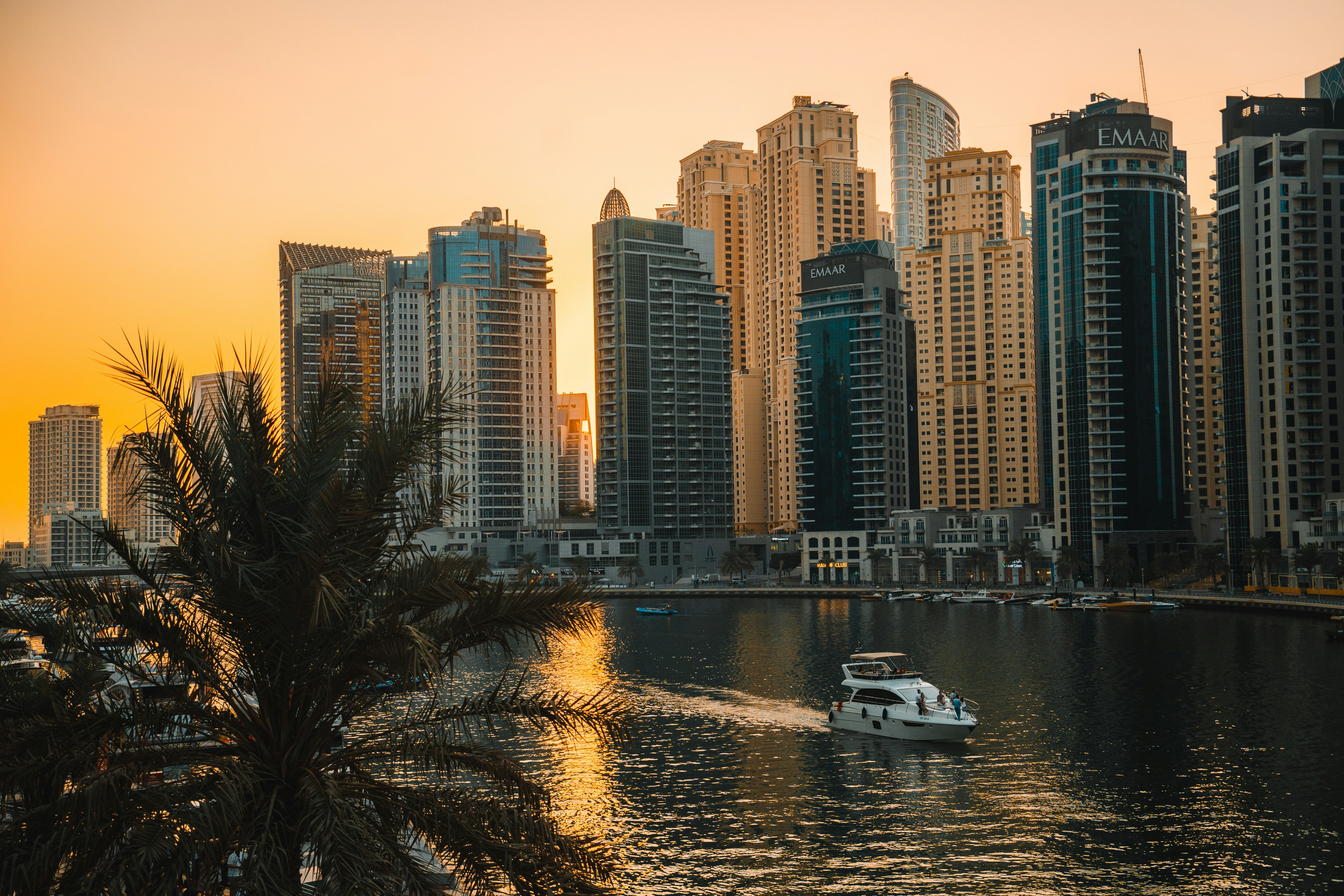
A considered look at the structural advantages, tax framework, and market maturity that continue to make Dubai a durable choice for long-view property investors.
By CYRA Editorial Team · July 2026
Key Takeaways
1. Dubai's endurance as a property market is widely viewed as resting on structural advantages, not cyclical hype.
2.The UAE framework generally imposes no personal income or capital gains tax on individual property investors, though home-country tax rules may still apply.
3. Regulatory maturity, digital title registration, and escrow protection are widely viewed as making Dubai one of the more transparent emerging property markets.
4. Dubai has historically offered a combination of rental yield and capital growth that many long-holding investors find attractive.
5. Compared to London and Singapore, many investors see Dubai as offering a distinct combination of net yield after tax, ownership simplicity, and lifestyle stability.
Why this matters
Dubai has been a global property destination for more than two decades. What has changed is the quality of the case for investing here. The market is more institutional, the regulatory environment more predictable, and the buyer profile more considered than it was ten years ago.
For long-view investors, the question is not whether Dubai is a viable market. The question is why it continues to endure as a first choice destination for capital that could go anywhere.
This guide sets out the answer from a developer's perspective. It looks at the structural fundamentals, the 2026 tax position, the comparison with other global cities, and the reasons investors continue to see Dubai as a destination worth committing to for the long term.
A city built on structural advantages
Dubai's growth as a property market is not accidental. It sits on a set of underlying conditions that were engineered deliberately over two decades.
The city is investor-led by design. Foreign ownership in designated free hold areas has been secured under the legal framework since the early 2000s. Property registration is centralised and digital.Escrow protection is built into the off-plan framework. The infrastructure that makes property investment work in Dubai was constructed as public policy, not left to chance.
The city is also international in composition. Investors from India, Europe, the UK, China, Russia, andNorth America have all built long-term positions here. This diverse capital base creates a market resilience that few emerging property markets can match. When one source market softens, another usually strengthens.
Add to this world class infrastructure, a mature banking sector, currency stability through the AED peg to the US dollar, and consistent government commitment to real estate as a strategic sector. The result is a market designed to reward considered investors who take a long view.
The 2026 UAE tax position
One of the most persistent reasons investors consider Dubai is the tax framework. The UAE position on individual property investment is widely viewed as more favourable than most comparable global cities, though the specifics depend on the investor's residency status and ownership structure.
At the UAE level, there is generally no personal income tax on individual earnings and generally no capital gains tax on property held by individuals. For Dubai residential real estate held by individual investors, there is no annual property tax of the type levied in many other jurisdictions. Rental income received by individual investors is generally not subject to UAE income tax at the personal level.Investors should note that these positions apply to the UAE side only; home-country tax rules may still apply to overseas earnings, capital gains, and rental income depending on residency and citizenship.
The UAE introduced a federal corporate tax framework in recent years, which applies to businesses above defined revenue thresholds. Individual investors with standard residential property portfolios generally sit outside this scope. Larger commercial property portfolios and corporate ownership structures should verify their specific position with a qualified tax advisor.
Value Added Tax applies at standard rate to most transactions in the economy, but residential real estate is generally treated distinctly, with defined carve-outs and zero-rating in certain conditions.
The result is that a considered investor in Dubai residential property is generally exposed to one of the lighter UAE-side tax environments among major global markets. However, tax outcomes always depend on the individual's own residency status, home-country rules, and ownership structure.Investors should verify current specifics with a qualified tax advisor at the point of decision.
Dubai compared to other global property markets
The clearest way to see Dubai's position is to look at it alongside other cities that international property investors regularly consider. The table below compares Dubai with London and Singapore across the factors that matter most for a long-view investment thesis.
Dubai stands out on three axes: the tax position, the yield range, and the accessibility of foreign ownership. London and Singapore have their own strengths, particularly around institutional depth and long standing legal precedent. For an investor prioritising net yield after tax and simplicity of ownership, Dubai's position is widely viewed as competitive.
Rate this position honestly for the investor's own priorities. An investor optimising for prestige and heritage may still choose London. An investor optimising for regional stability and low regulatory friction may still choose Singapore. An investor optimising for after-tax yield, growth potential, and residency alignment often arrives at Dubai.
A market that supports long-view thinking
For considered investors, market maturity matters as much as headline yield. Dubai's regulatory framework has strengthened meaningfully in recent years.
Escrow requirements for off-plan projects, defined defects liability periods, standardised sale and purchase agreement formats, and digital title registration all reduce friction and risk for buyers. The centralised property registry allows any investor to verify ownership records, project registration status, and escrow account details directly.
This is widely viewed as a level of transparency not always available in comparable emerging property markets. For an investor making a decade-scale commitment, this maturity of framework is often more important than short-term price movement. A market with clear rules is generally seen as helping protect capital across cycles.
The residency framework alongside property
Dubai property investment increasingly interacts with the residency framework, and this pairing is one of the market's most distinct advantages.
The AED 2 million Golden Visa property route generally provides ten-year renewable residency for qualifying investors, subject to eligibility criteria and current UAE regulations. A shorter two year investor visa is available at lower property thresholds. For international investors, this alignment of property ownership with residency stability supports continuity in schooling, business relationships, and lifestyle in ways that pure property investment in most other jurisdictions does not.
Visa rules, qualifying thresholds, and processing procedures are set by the UAE authorities and are subject to change. Investors should confirm current specifics with a qualified legal or immigration advisor before making commitments based on residency assumptions. Investors evaluating the residency angle can read our full guide to the UAE Golden Visa property route.
Waterfront and prime addresses
Certain Dubai locations have earned particular attention from long-view investors.
Waterfront properties on the Palm, Dubai Marina, and Blue waters carry premium pricing and have historically been viewed as offering stronger long-term capital appreciation than the broader market, though past performance is not a guarantee of future outcomes. Emerging waterfront communities onDubai Islands and the newer coastal developments add options at earlier price points for investors comfortable with earlier-stage community risk.
Prime central addresses such as Downtown Dubai remain a foundational choice for investors prioritising liquidity and international recognition of the location. Investors comparing yield across areas can read our full guide to property investment ROI and rental yields by area.
Established central districts such as Al Barsha and Business Bay combine strong connectivity with mid-tier pricing, offering a different balance for investors seeking yield alongside capital growth.
Practical questions before committing
Before committing to Dubai property investment, a considered buyer works through several practical questions. None of them require specialist knowledge. All of them require honest answers.
1. What is the total intended holding period, and does the investment thesis actually suit that horizon
2. What is the target community, and how does it fit the investor's yield or capital growth priority
3. Is the property registered under a formal title deed or a properly registered Sales Purchase Agreement
4. Are the tax implications for the investor's country of residence understood, since UAE-side favourability does not always translate directly to the investor's home jurisdiction
5. Is the exit strategy realistic given the target community's typical liquidity and buyer profile
An investor who can answer these five clearly is well-positioned to commit. An investor who cannot is better served by pausing and doing the additional work before signing.
Why Cyra is publishing this refresh
This guide is intended for investors who take a long view of Dubai as a destination for capital, whether or not they end up considering CYRA.
We build for the same kind of decision. Long-view investors are the readers most likely to benefit from a clear-eyed assessment of what makes Dubai endure as a property market. We would rather work with an investor who has completed the full comparison and chosen Dubai than one who has done none and chosen us out of expedience. The first commitment lasts. The second rarely does.

.png)
.png)